Tuesday, July 03, 2007

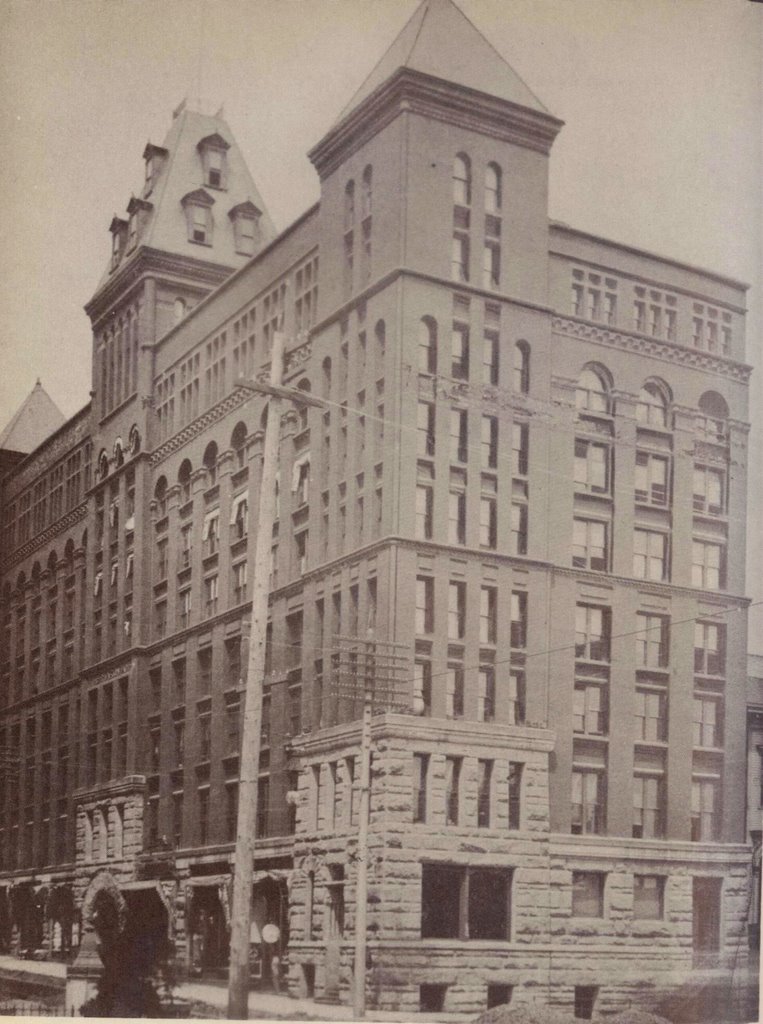
(Chamber of) Commerce Building
(1892-1934)

It was 1890 or so, & wunderkind George B. Markle Jr., the Pennsylvanian transplant who had, shortly after his arrival in Portland, been instrumental in the revival & completion of building the Hotel Portland (aka, "Villard's ruins"), convinced the Portland Chamber of Commerce they should build a new HQ on the north side of west Stark street between 3rd & 4th Avenues.1 Markle pledged his 2 banks as street-level tenants & secured a mortgage from New York Life Ins. Co. for its construction.

Ground was broken Sept. 2, 1890, but costs quickly accumulated, w/ overages to the tune of $170,000.2 Undeterred, Markle personally secured funding to complete construction. The 8-floor Chamber of Commerce Building, designed by Isaac Hodgson, Jr., opened to the public in September of 1892.

image hosted by blogger

Hailed as the NW's premiere office space (love that circa 1890-1910 Portland boosterism!), the Commerce Building (as it was called in later days) boasted the aforementioned banks, an auditorium, "the prestigious Commercial Club," a bowling alley, saloons, & a billiard room.3

However, the completion of the Commerce Building happened to neatly coincide w/ the run on gold, which lowered U.S. federal reserves to their statutory minimums. The Panic of 1893 was in full swing. Markle's banks closed for good before they could ever set up shop at their new location. New York Life foreclosed on the Commerce Building mortgage. Markle eventually returned to Pennsylvania.

In 1906 NYLife sold the building to the Spokane Portland & Seattle Railroad. A few years later, deeming the Commerce Building "too old fashioned" the SP&S then its local offices to the newer American Bank Building (completed in 1913). In the shadow of the Great Depression, SP&S, citing the tax & maintenance costs, & claiming that a remodel would be "too expensive & impractical," had the building demolished in 1934.4 The lot was used, & is still used, as a parking lot.

So when you pass Stark at 3rd & 4th, stand in wonder at that 70+ year-old parking lot.5

-d.d.


1 Furthermore, he was key role in organizing the N. Pacific Industrial Assoc., Portland Tanning, Columbia Fire & Marine Insurance, Portland Traction, the Commercial Bank of Vancouver, NW Loan & Trust, & the Oregon National Bank, to name a few, all amply assisted by his father's fortune. Markle Sr. was the founder of Jeddo-Highland Coal in the Scranton area &, along w/ Thomas Edison, built the 1st 2 coal-fired electrical power plants in the U.S.A. Markle Jr. came to Portland because he felt it was the young city that was going somewhere. For more on Markle see MacColl, E. Kimbark, The Shaping of a City: Business & Politics in Portland, Oregon 1885 to 1915 (Georgian Press Co., Portland 1976), p. 81-108.
2 MacColl, p. 85. $170,000 in 1890 is about, say, maybe, $29,000,000.
3 ibid.
4 ibid., p. 88
5 Seriously. I mean, Portland has its share of parking lots where once-proud buildings stood, for sure. But the majority of those buildings, as far as I know, were demolished in the late 40s & early 50s, for which I can't really blame anyone - that was the price of progress, then. But 70+ years, a parking lot?!?

Sunday, July 01, 2007

The Boss Saloon:
A Den of Scullduggery.
(1870s-1940s)

image hosted by blogger
The Boss Saloon in later, less scandalous times.

Before the Willamette was bridged, river crossing was via ferry. One such ferry, beginning around 1870, ran from Flanders St. on the west bank to a spot where the current Steel Bridge makes landfall on the east bank.1 On the west side, between Davis & Flanders, stood a 2-story waiting room building of the "flatiron" design: triangular w/ 3 sides.

In 1888, when ferry service ended after the 1st Steel Bridge was completed, the building became a saloon, moonlighting as a hiring hall for sailors to serve the grain ships which docked nearby. Not suprisingly, it was also, purportedly, a hotbed for shanghai-ing.2


Portland harbor in 1906.

According to legend, the Portland Merchants Exchange was birthed at the Boss.
a bartender, tired of answering questions, put up a blackboard behind his bar to list incoming ships and their berths for the information of sailors and waterfront gentry.

The exchange was organized and incorporated in 1879, the same year the O&CRR Ferry No. 2 was launched, and moved "uptown" to First and Ankeny streets.
3
In later years the saloon became a simple eatery, "Boss Lunch."

I'm sure it was demolished no later than the 1940s to make way for Harbor Drive (subsequently transformed into Waterfront Park).

-d.d.


1 This ferry was essentially a shuttle service to the terminal of Henry Villard's (& subsequently Ben Holladay's) Oregon & California RR, which also owned the ferry. Holladay would later build Portland's 1st horse-drawn steetcar line to shuttle RR/ferry passengers south into "downtown" Portland.
2 Perhaps more of a nerve center for Portland's shanghai system. Famous crimper Jim Turk used it as a base. Turk, reportedly, shanghai-ed his own son!! By the Willie Week (great article, btw), Turk is buried
Close by the corner of 20th and Morrison one finds the grave of hard-drinking Jim Turk, one of Portland's most infamous shanghai specialists, who sent many a drunk and unconscious lumberman to sea via the mildewed tunnels beneath Old Town; in death, Turk masquerades as little more than a wealthy pillar of local industry.
Further tales of Turk & fellow crimpers Larry Sullivan & Jim 'Bunco' Kelly include Kelly (who crimped 50 men in 3 hours, once) discovering 20 dead men who
had apparently found a keg in the cellar of a saloon and drunk heartily. It turned out, however, that they were actually in the mortuary next door and had drunk embalming fluid (formaldehyde) instead! Not a man to waste an opportunity, Kelly sold the bodies to an unsuspecting captain for $52 each ($2.00 over the going rate) because he had managed to get the men so “dead drunk” that they surely wouldn’t awaken until well out at sea.
Of course, if your are familiar w/ Portland in the end of the 1800s none of this should come as a surprise. Still, you should read this comic.
3 You can read about the Boss, & mainly abt what became of the 2nd ferry for which people awaited at the Boss, here.

Friday, June 08, 2007

Coney Island of the Northwest.

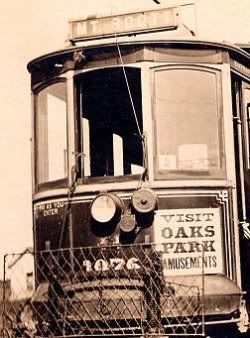
Oregon Water Power & Railway Co. began building Oaks Amusement Park in 1904 to stimulate weekend traffic on its interurban electric trolley line running from Portland to Oregon City, & to take advantage of the anticipated millions of visitors in town for the 1905 Lewis & Clark Centennial Exposition. At a cost of $100,000, the "trolley park" opened May 30, 1905, 2 days before the Expo opened at Guild's Lake to the northwest of Portland.1 When the Exposition closed in October, the Oaks acquired its benches, gazebos, & lamp posts2.

image hosted by photobucket
One of the Expo lamps is to the left, the willow-tree-looking thing, there.

After its 1st year of operation, the park was jointly managed by the OWP and the newly incorporated Oaks Amusement Company. The OAC leased the park from the railway for $35,000, w/ the OAC maintaining the grounds & managing concessions. However, the OWP, typical of rail interests in Portland at the time, reaped the lions share of profits, earning 5 cents each way in trolley fares & 10 cents per admission, on top of the $35,000 it was collected from the OAC. The OAC, in contrast, only collected a % of concessions income.

The year construction of the Oaks began, the 2 Portland city-only trolley companies - City & Suburban Railway and Portland Railway - had merged to become Portland Consolidated.3 In 1905, Portland Consolidated was sold to east coast interests & re-renamed Portland Railway Co.

image hosted by photobucket
A Portland trolley w/ advert for Oaks Park.

In 1906 Portland Railway & the OWP merged to become Portland Railway, Light & Power Co. PRL&P assumed ownership of the Oaks on June 29, 1906, & the managing Oaks Amusement Co. was dissolved in the spring of 1907. D.C. Freeman, who had worked in the administration of Lewis & Clark Exposition, was made manager of the park.

image hosted by photobucket

Local entertainment mogul John F. Cordray leased the park in 1909, giving the Oaks more leverage w/ the local papers & City Hall. In the 1920s, laws were passed prohibiting electric companies like the PRL&P from owning amusement parks, making the "trolley park" phenomena an anachronism, & Cordray purchased the Oaks outright.4

image hosted by photobucket
A trolley is visible in the distance of this view.

Although Oaks Park proudly marches on to this day, if I were to make some changes, I'd like to see (a) one decent roller coaster, & (b) a real slammin' video arcade. I mean, Avalon on Belmont is great & all, but the selection can be a bit stale5, & I'm not always in the mood to deal w/ the Bourbon Street-esque flavor surrouding Ground Kontrol on a Friday or Saturday night.6 While they're at it, can they rebuild the Oaks Tavern?7

-d.d.


1 Sellwood Park had been a potential location for the Expo. So was Ross Island (imagine how different the city might be if that had happened) and 'Hawthorne Park,' a large open space between Hawthorne and Division and 9th & 12th.
2 Purportedly one of the Expo lamps still works and is on display in The Oaks Museum. This past summer I wandered the entire Oaks property & I believe that this building is (or was) the "museum," but it was neither open nor appeared to have been for some time. Peeking thru the windows, I spied old pictures on the walls w/ description cards under them, but that was it.
3Abridged History of Portland's Trolley Years.
1891: The City & Suburban Railway Co. acquires a fistful of smaller trolley companies to become largest streetcar company west of the Mississippi
1892: The Portland Consolidated Street Railway Co. emerges as the counterpart to the City&Suburban.
1893: The East Side Railway Co. completes 1st electric interurban line in the U.S. between Portland & Oregon City.
1896: Portland Consolidated goes bankrupt & is purchased by Portland Railway Company.
1901: East Side Railway Co. sold in foreclosure & eventually emerges as Oregon Water Power & Railway Co. by 1902.
1904: Portland Railway and City & Suburban merge, forming Portland Consolidated Railway.
1905: Portland Consolidated Ry. sold to east coast interests for $6million & name changed to the (second) Portland Railway Co.
1906: Portland Railway consolidated w/ Oregon Water Power & Railway to become Portland Railway, Light and Power Company. PRL&P presided over a system of 28 streetcar & interurban lines, zenith-ing in the years just prior to World War I.
1924 PRL&P changes name to Portland Electric Power Company (PEPCO), but lines remained essentially the same. Although PEPCO operated 3rd largest narrow gauge streetcar system in the US, growth slowed during the 1920s as cutbacks in service & labor, such as remodeling equipment to facilitate one-man car operation, became the norm.

4 For more info on Oak's Park, see Sara Paulson's The Oaks in the Progressive Era.
5 By "stale," of course, I actually mean "too new." As in, everything's a racer or a shooter. & they took away Virtual On. What happened to the side-scroller shooter? Metal Slug, anyone?
6 Or the pre-emptive heavy police presence.
7 see The Oaks Tavern (1905-1920s), June 16, 2006.

Thursday, May 17, 2007

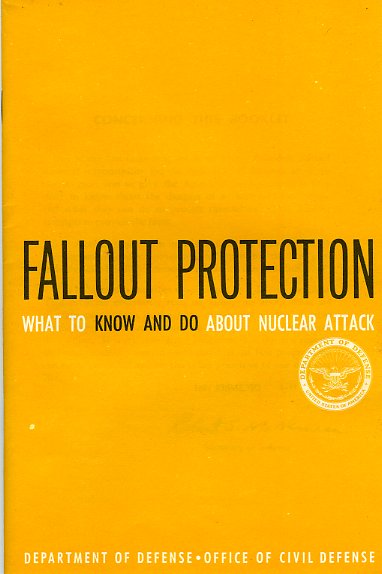
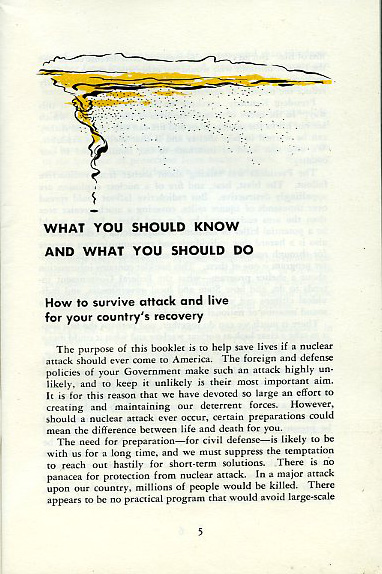
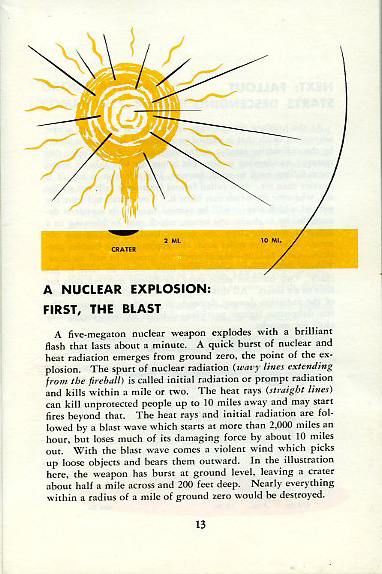
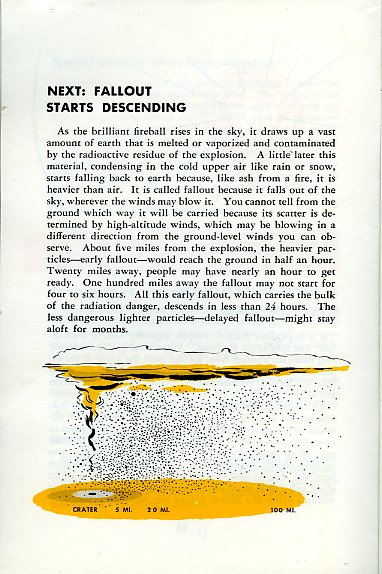
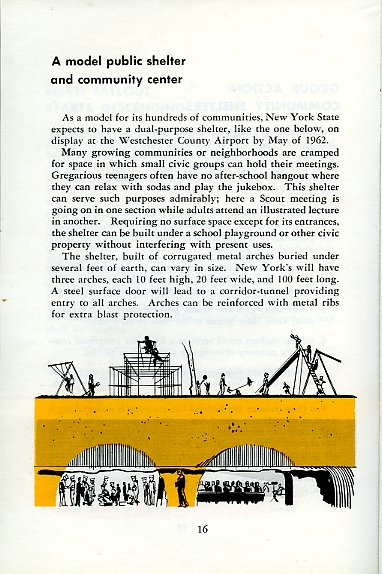
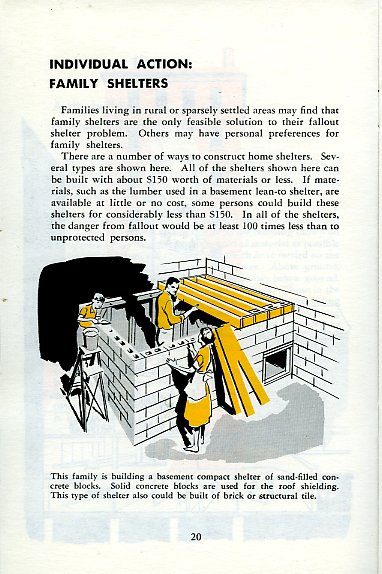
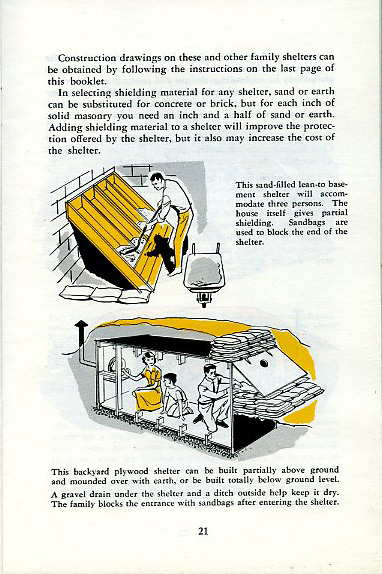
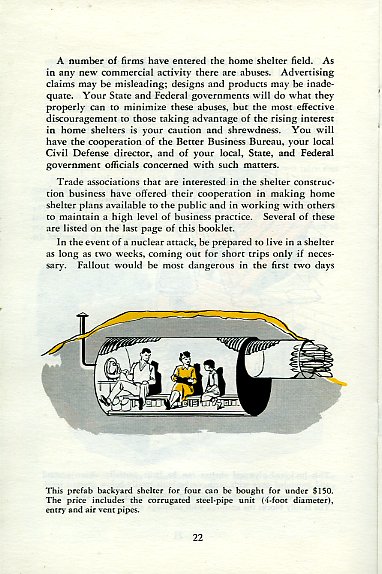
Fallout Protection
What to Know & Do About Nuclear Attack.

Fallout001 Fallout002

Fallout003 Fallout004

Fallout005 Fallout006

Fallout007 Fallout008

These are all from a 1961 Dept. of Def. publication.1 That orangey color is really... eye-catching. My favorite's that last one: Mom & dad & child in thier little fallout shelter, dad cranking the hand-driven ventilator, mom reading the ONE BOOK in the shelter. What's 2 weeks when you have family?

-d.d.

1 W/ an intro by Robert McNamara!!

Monday, April 30, 2007

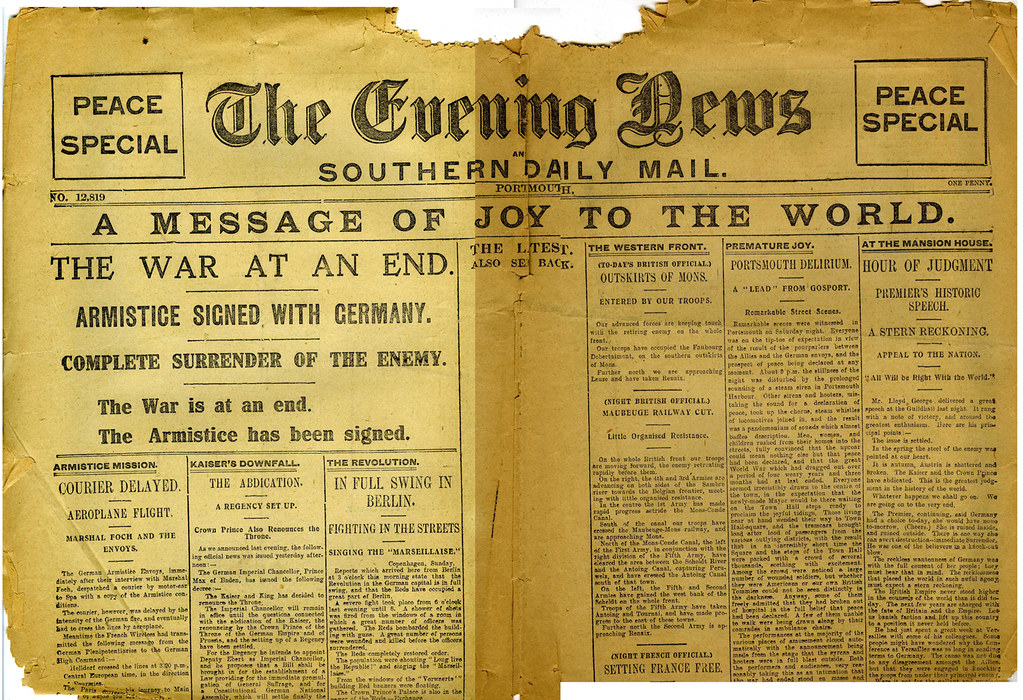
Peace Special.

image hosted by Flickr.

My maternal grand-aunt was a Red Cross nurse stationed in Portsmouth, England, during the first world war. This newspaper, not surprisingly, was in the back of her scrapbook. Sorry the paper won't fit on a modernday scanner. I like how the paper is formatted to be folded in half vertically, with a solid 2 inches of blank paper in the middle.

-d.d.

Friday, April 20, 2007

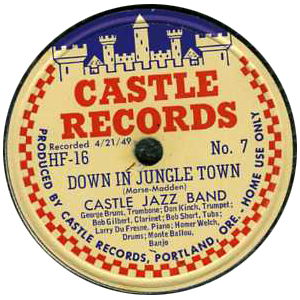
Down in Jungle Town.

So, back in the late '40s, there was a record label outta Portland called Castle. Castle was the (presumably) exclusive label for the Castle Jazz Band.

hosted by flickr

The Castle Jazz Band used to play out of the Castle Restaurant down in south Milwaukie, above the Clackamas river, which was recently demolished, I think.1

Found the above record label-piece in a rubbish bin, only loosely connected to the shattered remains of a 48.

-d.d.

1 Or so reports the always entertaining Schlockstar.

Wednesday, April 18, 2007

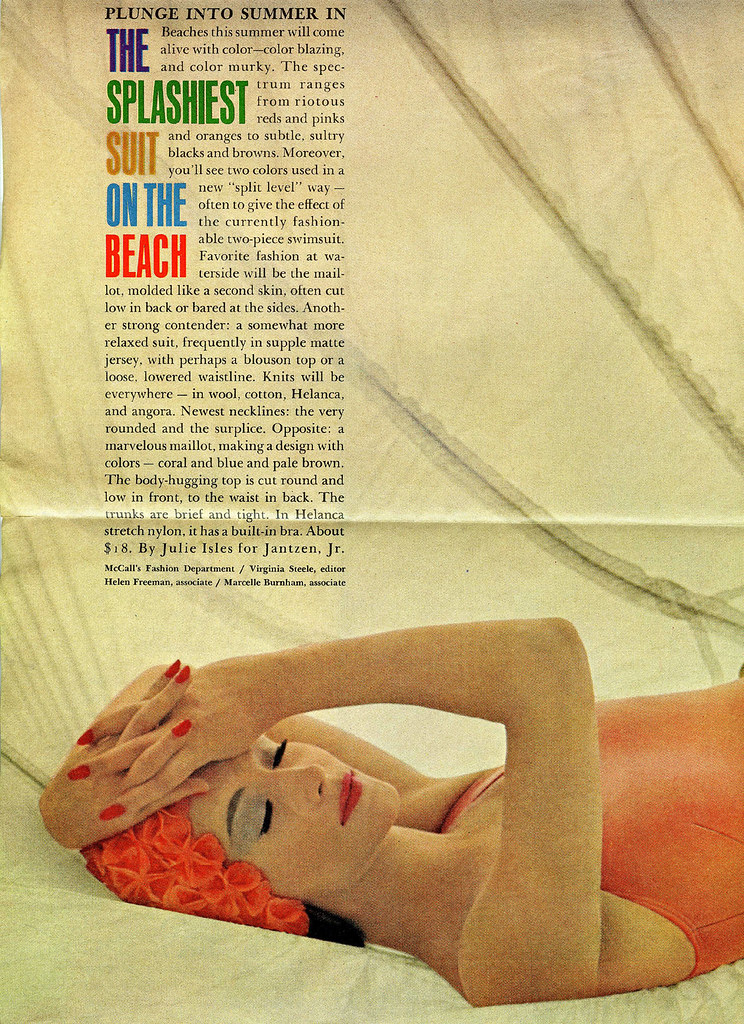
Color - Color Blazing, and Color Murky.

It turns out my mother's aunt, who went to college1 in, like, 1907 or something, when that was kinda not the thing ladies did, AND THEN never married, was a bit of the homebrew historian.2 Her typewriter-keyed manuscript weighs in at a hefty 250+ pages, including some loose newspaper & magazine clippings from the early-to-mid '60s.

On the back of a magazine article is this gem...


Click to enlarge

The "currently fashionable two-piece swimsuit?" Apparently this mag was too frou-frou to just call it a bikini.

Still, love that swank '60s ad art.

-d.d.

1 Psychology.
2 And, evidently, a bit of the fanciful illustrator.

Wednesday, February 07, 2007

Eastmoreland / Errol Heights Line

In 1910 the Ladd Estate Co. laid tracks east of existing PRL&P tracks on Milwaukie up Bybee to the site of the under-construction Reed College.1 Two years later the tracks to the campus were removed, & new tracks laid heading south of Bybee at S.E. 32nd, terminating at Rex Avenue. The LEC leased trolleys from PRL&P to service the new real estate development, called Eastmoreland. That same year the line was donated to PRL&P by the LEC.

In 1913 track was laid by another real estate developer, the Fred A. Jacobs Co., off the 32nd Ave. Eastmoreland tracks heading east on Knapp.

image hosted by photobucket.
Red line is the original Eastmoreland line, green the Errol Heights extension.


Maintained by the Errol Heights Railway Co., w/ a car & operator supplied by PRL&P at 91.4 cents per car-hour, the car ran 10 & a half hours a day. Riding the Errol Heights line was free, FA Jacobs/EHR assuming all costs. 150 or so people rode the line each way daily, but despite this ridership, offers by EHR to sell the line to PRL&P were rejected, PRL&P citing a policy of not operating lines 5 miles from the city's center.2 Its unclear how & why, but the line was merged into the Eastmoreland route in the 1920s anyways (I would guess EHR simply surrendered the line).

The merged Eastlmoreland/Errol Heights line trundled on until 1926, when most of the line was converted to gas bus. The Errol Heights section, at least, appears to have been completely abandoned in 1929.

While there are no photos of trolleys on the Errol Heights line, the only car known to have operated on it was the 1500. Built in 1892 by the Patton Motor Car Co. as an experimental single truck (one set of four wheels) gas-elec. trolley, it first made runs on the Metropolitan Railway's3 standard guage line, which ran 6 miles from downtown at 2nd & Glisan south to Riverview Cemetary. Use of the 1500 on this line was considered a failure, but the car was remodeled in 1903 into a double-truck all-elec. car.

image hosted by photobucket.
No. 1500 as a mail car.

From thereon, it moonlighted variously as an interurban car, parlor car, funeral car, mail car, &, finally, a passenger car on the Errol Heights line. Retired in 1921, it was the only car w/ a center entrance to have seen significant use.4

image hosted by photobucket.
No. 1500 as a funeral car.

Trolley funeral cars were available in many large American cities in the early 20th Century. W/ unpaved roads & horse-drawn hearses, trolley funeral cars offered a more civilized journey for the deceased. Trolleys were chartered to transport the funeral party to & from a cemetary along an existing trolley line. They usually included a small door on the side of the car at floor level for loading & unloading the casket. Usually, upon arrival at the cemetery, the casket would be transferred to a hand carrier & wheeled to graveside.

-d.d.

1 Boxcars were also rented by LEC from PRL&P to assist, presumably, in the construction of Reed College's oldest buildings.
2 Labbe, John. Fares, Please!: Those Portland Trolley Years. Caxton Printers, Ltd. Caldwell, Idaho. 1980. p. 158-159.
3 Incorporated 1889, sold to the Multnomah Street Railway Co. in 1892.
4 Thompson, Richard. Portland's Streetcars. Arcadia Publishing. 2006. p.98

Friday, January 26, 2007

Alberta Line.

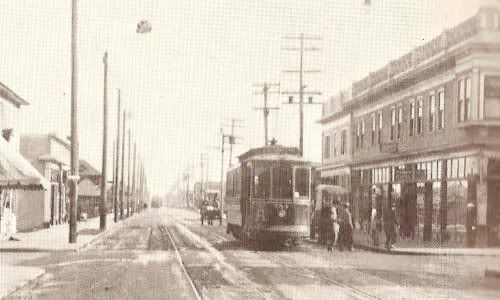
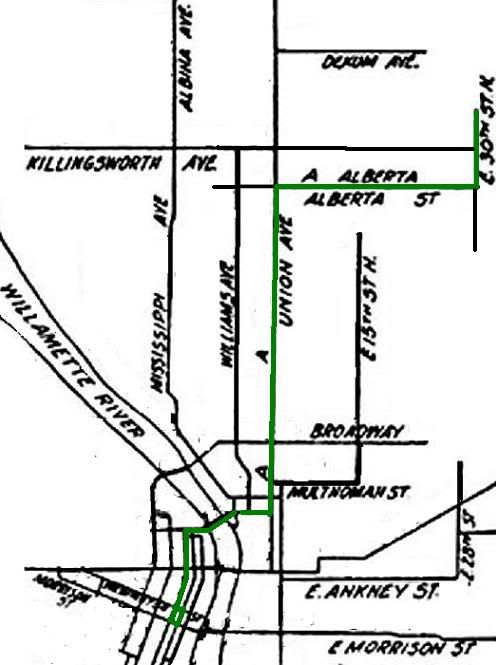
Portland Railway Co. initated the Alberta Line (1903-1949), running from a downtown loop of 2nd-Morrison-3rd-Washington out to its terminus at N.E. Alberta and 25th.

William Hayes collection
W. Hayes collection

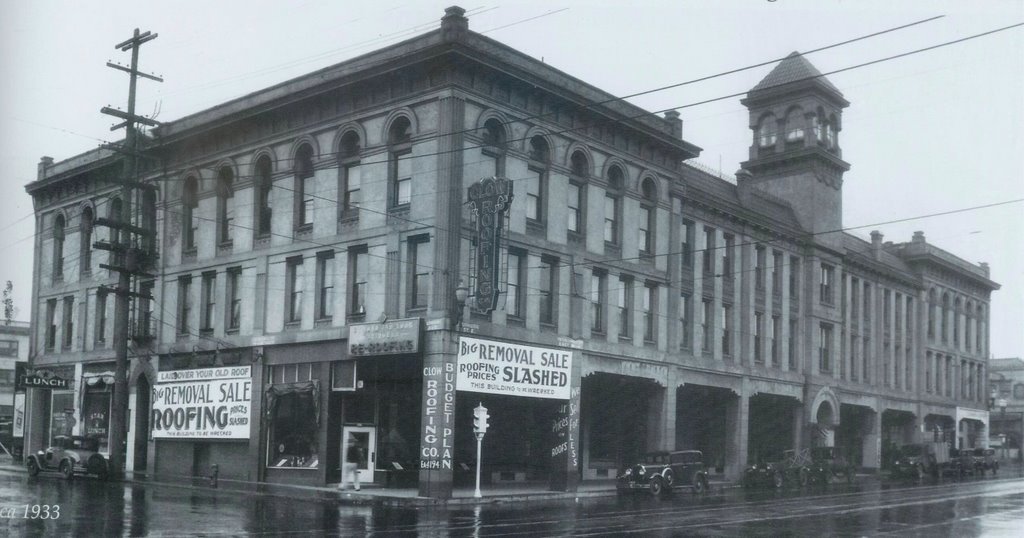
Isn't that building on the right still standing? It looks really familiar but I can't place it.

By 1909, the line had been extended in spurts to N.E. 30th at Ainsworth.


Converted to bus in 1949.

-d.d.

Monday, January 08, 2007

A Few More Demolished Buildings of PDX.

I have several never-posted PDX's Historic Trolley Lines map entries I'm trying to get around to actually posting. But before I do that I figured I would add the sites of the Marquam Grand & the Burkhard Building to the Demolished Buildings of PDX map.

image hosted by Blogger
The Marquam Grand

image hosted by blogger
The Burkhard Building

Credit where credit's due: Dan Haneckow at Cafe Unknown did the research & wrote far-more-in-depth-posts-than-I-ever-could on both these buildings.

-d.d.