Friday, July 21, 2006

Burnside, "THE SKID-ROAD."

image hosted by photobucket
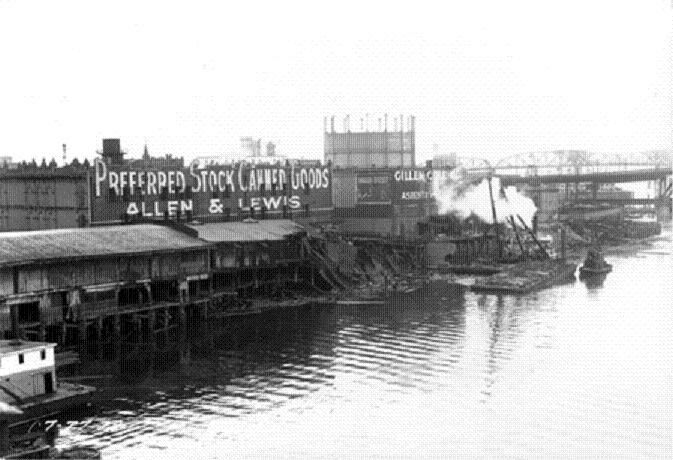
Portland waterfront near the Burnside Bridge, c.1925


From a WPA "Guide to Portland," of all things.

The wide thoroughfare North of Ankeny Street is "THE SKID-ROAD," known as a meeting place for itinerant workers from all over the country. In former days Burnside Street separated the rough North End "bowery" district from the more genteel parts of town, but now it is the southern boundary of a cheap mercantile district of lounging rooms for itinerants and numerous cheap hotels and flop houses. These are gradually being pinched out to make room for factories and wholesale warehouses. In 1905 Mayor Harry Lane, later United States Senator, clamped down on the women denizens, and scattered them to all parts of the city. Since then the city has had no restricted red light district.
Portland had a "restricted red light district?" No surprised, really. After all, what western U.S. town was not without its, uh, adult entertainments?

Portland, you dirty girl, you.

Wednesday, July 12, 2006

d.d. tinzeroes vs. the Transformers

I spill a lot of ink discussing 1986's Transformers: The Movie, in my first piece over at Reviewiera.


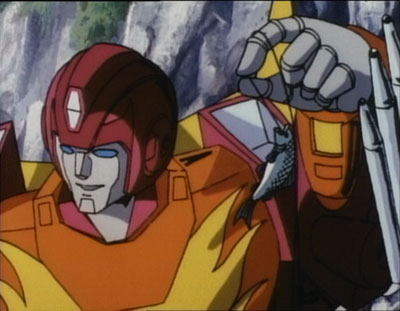
I always found the above image inexplicably disturbing. Actaully, "disturbing" is too strong a feeling. Just a sorta weird, "soemthing's off here," "whut da?" feeling.

Like, here's this gigantic, multiple-ton alien artificial life creation from an artificial metal planet1, dangling a Terran biological life form (a salmon? a trout? it’s a sizable fish by human standards, I think, if scale is ever consistent in Transformers) like a fly on a string. What's a human in his eyes? An intelligent guinea pig? Even giving the Autobots the benefit of being, at least, are benevolent, this still has a strange, sinister, overlordy tinge to it.

-d.d.

1 Cybertron: Presumably a "real" planet once, transformed by the Quintessons into a factory planet millions of years ago. They built a race called "Trans-organics", part-animal, part-machine, to serve them. Eventually the Trans-organics came to be beyond Quintesson control, and were placed in suspended animation in Cybertron's core (ladies and gentlemen, welcome to: "things I learned from the third season of Transformers!). The creation of the first versions of the Transformers soon followed, although they could not transform yet. Soon they were programmed to have intelligence, and perhaps unintentionally, feelings. Autobots and Decepticons are descended from the two basic classes of robot the Quintessons' built: industrial/commercial (Autobot) and military (Decepticon). Guardian robots, a third class, were produced to protect the Quintessons from their other creations. Eventually, a proto-Autobot known as A-3 built a device (the Matrix?), hidden inside his slave brand (the proto-Autobot insignia), that disabled the Guardians, and at last the Transformers (Autobot & Decepticon) rose up. The Quintessons fled into space to construct a new home world, Quintessa, and another slave-race of transforming robots, the Sharkticons, to serve them. They would remain uninvolved in Cybertronian affairs until Hot Rod & co. crash landed on Quintessa at the time of Transformers: The Movie.

Tuesday, June 27, 2006

Venture Brothers

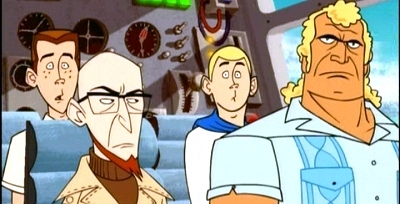
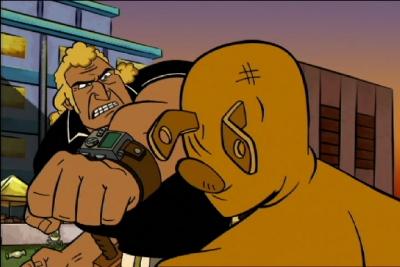
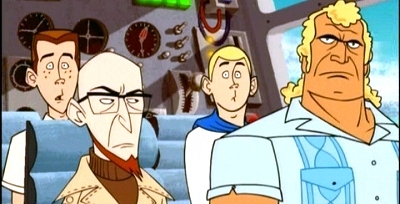
The first episode of the Venture Brothers I ever lay witness to was one Sunday night at the Jolly Inn, back when Jeff Bastard used to wage-slave there and when C. Collision still used to get intoxicated. Being a public house of the lower order, the television was always on. Invariably, the channel was frozen on Adult Swim, w/ closed captions. This was the medium of my first Venture Bros. exposure. Despite closed captioning, my usual distrust of all things Adult Swim was tempered by visual images so bizarre my interested was thoroughly piqued.
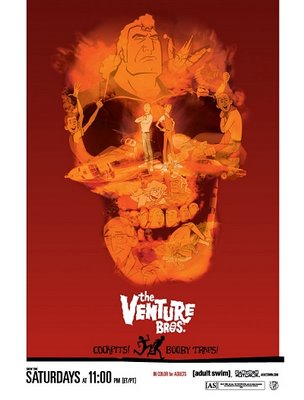
image hosted by BLOGGER

I experienced a second episode when aforementioned Collision and I grabbed a 6er on the way home from the more upstanding Basement Pub after it closed (it closes at 1:30, giving the intelligent inebriate one full hour before beer-thirty to procure after-hours entertainments). Upon viewing the opening credits with sound, it only took few stanzas into the theme for me to declare, "this is J. G. Thirlwell!"

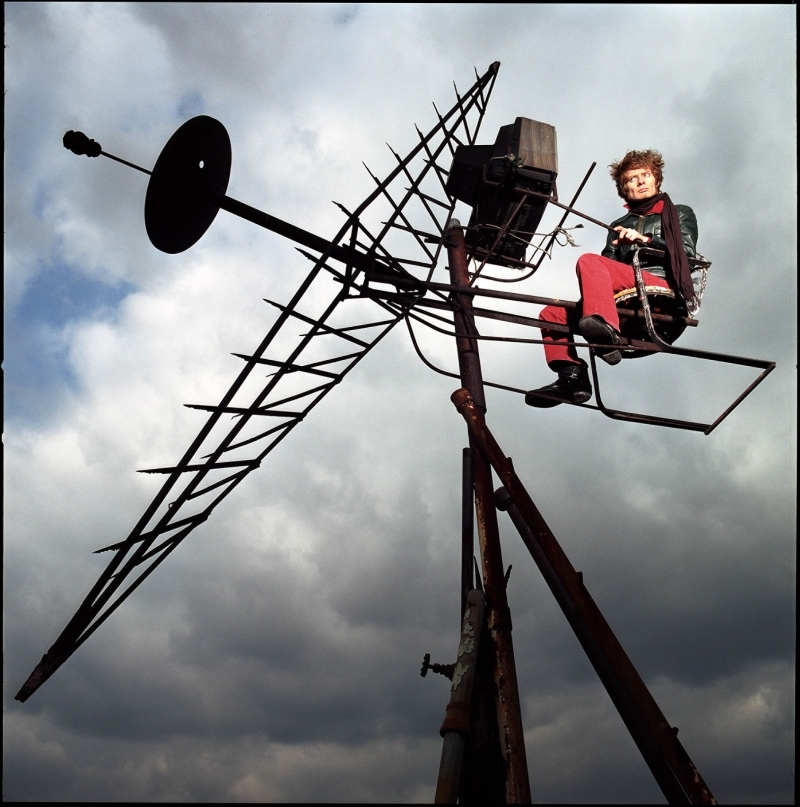
J.G. Thirlwell, of course, is a musical fave of mine since shadowy past days of high school. At the time I was an insufferably devoted NIN/Minstry fanboy and was looking for more of the same ilk. Thirlwell's work, all under the various Foetus monikers, was not the same ilk (nor, as it turned out, was PWEI, which also remains my other musical fave). I dabbled in several Foetus albums, but I recall the Sink album, consisting of old singles and various instrumental pieces, being the first to really get under my skin.
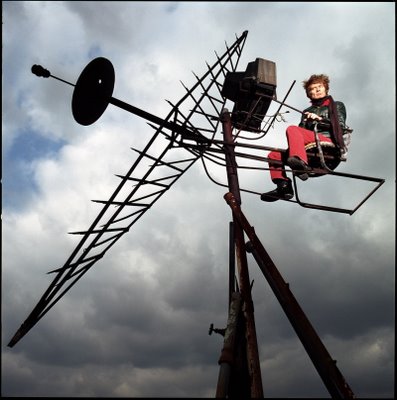
image hosted by blogger

Around my senior year of high school Thirlwell's first and only album for Sony came out: a Foetus disc entitled Gash. That album rocked. It rocked even more when I became a sexually frustrated college freshman, the de facto soundtrack to my year of dorm life. This fit all the better when Thirlwell interviewed and said Gash was about a breakup.

I believe I may have never seen another episode of the Venture Brothers on television, but Collision was way into the show, and would pass along tidbits when the fancy struck him. We both pined for the dvd release. Collision later related to me that investigations had revealed none other than Ben Endlund was also involved in the Venture Brothers as a writer as co-creator Jackson Publick's college roomate.
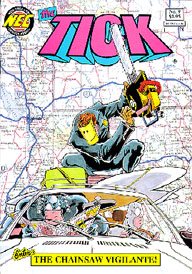

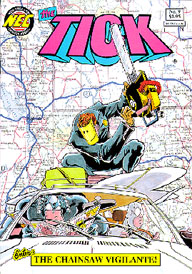
Ben Endlund is the artistic and writing genius behind the Tick comic book, which I had read in the even more mist-enshrouded and spooky days of middle school, and, of course, watched the still rather bizarre, surreal, what-the-hell-is-this-doing-on-TV-anyways Tick animated series on Fox when I was in high school.

When Venture Bros., Season One finally hit dvd last month, I didn't notice. I was busy setting myself up for heartbreak by falling for Dirk Nowitzski and Josh Howard. But when that was over, I was ecstatic to find out that a TV series I'd seen one actual episode of (the muted one doesn't count), scored by one youth hero, written by another, well then, dammit, I'm going to the viddy rental store!
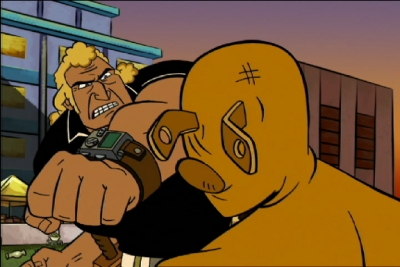
image hosted by blogger

13 episodes of bliss.

Friday, June 16, 2006

The Oaks Tavern.

(1905 – 1920s?)

The Oaks Tavern, located at the northwest tip of the Oaks amusement park, was a feature attraction of the park when it opened in 1905, serving Weinhard's beer for five cents a bottle along with a fine dining experience, a view of the Willamette and live music.


In as little as a year, however, the temperance crusade began to move against the Tavern. In 1906 an attempt was made to designate Sellwood a dry neighborhood. The measure failed in an county election that June, but in the wake of defeat it was reveled that the Oaks' Superintendent of Construction had paid for Oaks and OWP employees to stay overnight in a Sellwood hotel, the address of which they used to register as Sellwood resident voters. Certain prominent Sellwood landowners further colluded by swearing (falsely) to the veracity of the employees' resident status. Despite a grand jury indictment booze remained king at the Oaks.

In the following year however drunkards from the Oaks managed to accomplish what democracy could not. In the remaining months of 1906 an off-duty police officer threatened an employee with his revolver, and in another incident a inebriate attempted board a moving trolley and predictably miscalculated his leap, resulting his skull being crushed beneath the steel wheels. In 1907 management declared the Oaks dry.

The Oaks attempted to lift this ban in 1908 and again in 1909, although the City refused to grant new liquor licenses. It might seem that the third try was the charm in 1910 but the reality was that new owner John Cordray's local celebrity had more to do with the Oaks' new designation as "Portland's adult playground." But the looming national nightmare of Prohibition was clearly on the horizon and in 1914 the Oaks' went dry once more. By 1916 Prohibition was law in Oregon.

I'm not sure when the Oaks' Tavern was demolished. I can't believe that the building was that structurally long-lived in the first place. The Willamette flooded to varying degrees regularly and lack of patronage due to Prohibition would probably see the Tavern torn down prior to the second world war, if not the first.

Monday, June 12, 2006

Sunday, June 11, 2006

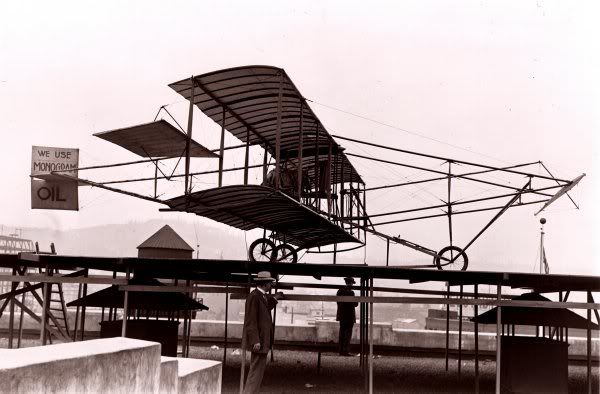
Silas Christofferson Flies from Roof of Multnomah Hotel.

(June 11, 1912)


Christofferson prepares for takeoff on ramp atop the Multnomah Hotel.


Silas Christofferson flew from the roof of Portland's Multnomah Hotel across the Willamette and Columbia rivers to Pearson Field in Vancouver in his 40-horsepower-engine biplane in 12 minutes.


Christofferson's biplane takes off from roof of the Multnomah Hotel.

Thursday, June 08, 2006

Willamette Shore Trolley.

A few colleagues and I sessioned upon the Willamette Shore Trolley a weekend past ago.

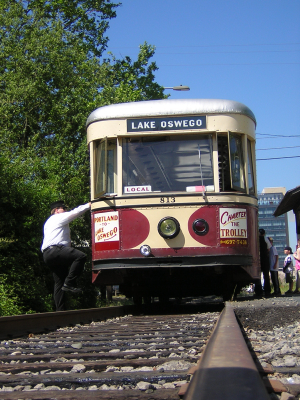
The 1932 J.G. Brill Co. "Broadway" Trolley Car (No. 813) is maintained and operated by the historical hobbyists over at the Oregon Electric Railway Historical Society, and the trolley fares (10bucks round trip, 6 one way) are a primary revenue stream for the Society.

The trolley has a schedule of sorts, although since this is most definitely a tourist and enthusasist's mode of transportation, the Conductors & Motormen are not adverse to running late. The trolley itself is comfy and airy, and rocks, sways, swings, creaks, squeaks, and rattles as it rolls down the old Red Electric tracks from SW Moody & Bancroft to downtown Lake Oswego. One fellow remarked the trolley was rocking him to sleep with its rhythmic swifting and swaying, which is notable if only because there are none of the bumps associated with riding a bus and a fraction of the noise.

The trolley itselfs sort of a queer-looking thing. My colleagues noted it was a blocky and ackward looking vehicle. I have to agree insofar as its definitely resembles little the what we think of as a "traditional" trolley, by which we're really thinking of just about anything built between, say, 1890 and about 1915 or so. It is these trolleys which grace the fronts of ready-made rice boxes and sit in family Italian restaurants.

photo hosted by flickr.


This later-day Broadway car, however, resembles something I'd expect to see in a Miyazaki film. It’s a strange breed that mixes something distinctively old (a trolley) with a lot of features I'd frankly expect to find on a 1950s autobus. Bizarre!

Wednesday, June 07, 2006

Lewis & Clark Centennial and American Pacific Exposition and Oriental Fair, Issue 0.

June 1, 1905 - October 15, 1905.

Image hosting by Platial
Photo from Oregon Historical Society collection.

After hemming and hawing quite a bit I've finally just started plopping locations from the 1905 Lewis & Clark Centennial Expo into a new map over on Platial. Hopefully some additional photos and text end up here at the Tinzeroes mothership, but we shall see.

The 1905 Expo is a big reason I liked Platial in the first place. Guilds Lake, where the Expo was held, is what we call today "Northwest Industrial Portland" and I still remember the first time I saw a photo of the Expo and exclaimed "where was that?" So, here we go...

Wednesday, May 31, 2006

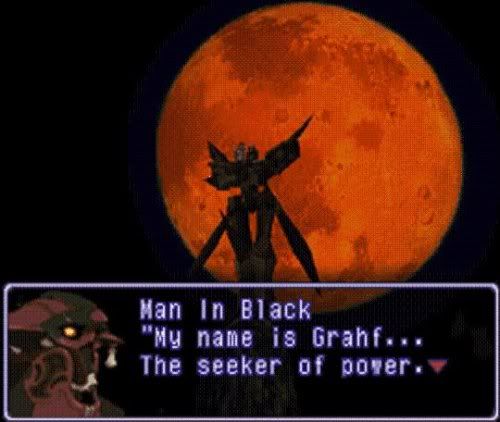
My Name is Grahf... the Seeker of Power.

If I could pick a memory most fond out of the four years I went steady with my Sony Playstation, I would have to go with Square's 1998 sci-fi psycho giant robot RPG Xenogears. I played all 30 hours of this game twice: the first in 1999-2000, the second in 2002.

Xenogears is the only game that makes me consider the possibility firing up the ol' Playstation, complete with fire-engine red SD Ultraman stencil. Then I remember better things to do with my spare time. Still… the temptation.... lingers…

Regardless of whether I will ever fire it up again, I think Xenogears was and is (given what I gather to be a recent retro movement in the gaming world in regards to RPGs) a fantastic science fiction RPG.

image from RPGCORNER.
Fei, Billy, & Bart take on two double-tailed blue coyotes.

The story of Xenogears and the world in which it takes place in ("Ignas") can be described as the unique flavor one might get when by taking substantial, Japanese-seasoned portions of wuxia tradition, Frank Herbert's Dune, television's groundbreaking Neon Genesis Evangelion, and a mishmash of other assorted skiffy tropes and devices, put them in a blender together, and hit frappe.

This all comes at your pretty fast and gets the first act off to an interesting start. Things don't get really interesting, for me, at least, until protagonist Fei is in the Aveh desert and a strange Gear (a giant robot) flys up and lands on top of a natural stone pillar.

The cloaked and masked pilot emerges and stands on the shoulder of the Gear and speaketh...


Okay. This is cool. Some nice operatic music goin' in the background. I'm diggin' it. Then he drops this gem:


Whoa! What does that mean? What's going on here? The very second Xenogears drops this "slayer of god" (a phrase actually used a little later on, if I recall) concept into the soup, it essentially drives the rest of the story to the very end.

Monday, May 15, 2006

The Red Electrics.
(1914-1929)


In 1913 the Portland Eugene & Eastern Railroad electrified the majority of its steam locomotive passenger line, the only major passenger line in the nation to do so. Service out of Portland's Union Depot (today: Union Station) commenced January 17, 1914. The following year PE&E changed its named to Southern Pacific.

pic from TRI-MET. image hosted by photobucket. click to enlarge
A Red Electric.

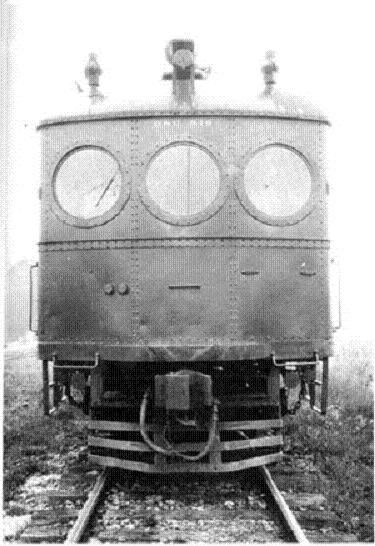
Red Electrics were built by Pullman, with steel frames and exteriors, giving them a modern-yet-alien industrial look. The inside was trimmed in mahogany, and comfortable seats were upholstered in green. The unique and eye-catching trifecta of circular windows were a safety feature engineered by Southern Pacific, providing more structural protection to the motorman in case of crash. These exclusive-to-the-Northwest quasi-proto-Streamliners ran from Union Depot down 4th street to Jefferson St., where the line split in two.

The Eastside Local continued south on the west bank of the Willamette River, running on tracks used today by the Willamette Shore Trolley, to Lake Oswego.

City of Lake Oswego Public Library collection.
Eastside Local at Oswego stop.

From Oswego the line curved southwest through Tualatin, Sherwood, and Newberg, until it rejoined its sibling Westside Local in St. Joseph, 3 miles north of McMinnville.

City of Lake Oswego Public Library collection.
The Eastside Local along the Willamette.

Between Portland & Oswego, directly across from where the Waverly Country Club is today, is Elk Rock. The Eastside Local, already clinging to the edge of the Willamette's steep banks (using, among others, the six hundred eightysix foot long Riverwood Trestle, still standing today), would circumnavigate Elk Rock by use of the Elk Rock trestle (built in 1888), which curved around the west edge of the rock, high above the river.

photo from Tri-Met.
The old Elk Rock trestle.

The Eastside had to slow to a mere 10mph while traipsing the trestle. Rocks & gravel were shaken lose by the passing trains' vibrations, falling and bouncing off the steel tops of the Red Electrics. With this in mind, Southern Pacific discontinued the trestle by digging a 1,396-foot long tunnel through Elk Rock in 1921.

photo from Tri-Met.
North entrance to Elk Rock Tunnel.

This tunnel make a soft "S" curve, resulting in absolute darkness at the midpoint.

Bill Volkmer collection.
South entrance to Elk Rock tunnel, on the night of the last run of the Red Electrics.

The Westside Local headed over the immediate southwest hills, cutting a route mirroring today's Barbur Blvd., through Burlingame & Hillsdale en route to Beaverton and on to Hillsboro and Forest Grove. From there it headed south to St. Joseph to re-merge with the Eastside Local.

Bill Volkmer collection.
The Westside Local departing Portland.

In 1917 Southern Pacific electrified the line from St. Joseph down to Corvallis. This expansion brought the total mileage of electrified track to a total of 180 ELECTRIC miles. The line continued to from Corvallis to California un-electrified.

Jim Sporseen collection

The Red Electrics continued service in this fashion, peaking in 1920, when sixty-four (64) Red Electric trains operated per day. Unfortunately, by this time road conditions in the Pacific Northwest had improved markedly and the automobile was beginning to cut into passenger railway profits, and service on the line began to shrink until October 5, 1929, when the Red Electric passenger line was discontinued.

Southern Pacific continued to use the tracks for frieght until 1984.

Jim Sporseen collection